

In 2026, posting at the right time is no longer as simple as following generic charts that say Tuesday at 9 AM works best. The digital world has shifted. Feeds are no longer chronological. AI now curates, predicts, and recommends content based on behavior patterns rather than timestamps. And yet, timing still matters, perhaps more than ever.
Why?
Because timing influences your engagement velocity, the core signal that AI-powered feeds use to decide whether a post should be shown to thousands or quietly buried. Posting at the right time puts your content where your audience is already active, responsive, and primed to engage. In 2026, timing is no longer about hitting the best hour, it’s about aligning with micro-behaviors and platform algorithms that prioritize freshness, relevance, and predicted performance.
This blog breaks down exactly when your audience is listening in 2026 and how to adapt your posting schedule to match the AI-driven era.
Wanna boost your brand engagement in 2026? With Hashtech, plan your social media strategy today and reach your audience more effectively.
Why Posting Times Matter More Than Ever in 2026
2026 algorithms don’t simply push new content to everyone. They use:
- Engagement velocity → how fast people interact after posting
- Viewer availability windows → when your audience is active
- Micro-behavior predictions → when individuals typically scroll
- Content-type patterns → which times work for video vs text
When you post determines whether the algorithm even gives you a chance.
If you post during dead hours, your content becomes weak.
It means: Weak start → low ranking → low reach → low results.
The Science of Posting Times in 2026
Algorithm Changes Shaping Posting Windows
2026 algorithms are not just looking at what you post; they’re analyzing how your content is likely to perform before your audience even sees it. Platforms use AI models to predict engagement based on time of day, past behavior, scroll tendencies, and even device patterns. This means that posting during low-activity windows reduces your predicted performance score. Even if you have excellent content, poor timing can push your posts out of the recommendation cycle.
Another major shift is the new emphasis on engagement clusters, where platforms analyze when groups of your followers tend to be active together. Posting during these clustered periods greatly improves your reach because the platform can test your content against a larger active segment at once.
Example: If your audience tends to open Instagram at 8:15 AM, posting at 7:55 AM gives your content first position in their personal AI-generated feed.
Why Audience Behavior Has Changed
Unlike earlier years, we’re no longer dealing with predictable routines. Work-from-anywhere culture has blurred traditional timings. People now engage in short micro-sessions throughout the day like 30 seconds of TikTok in the elevator, two minutes of LinkedIn between meetings, or a quick Instagram Reel scroll during lunch.
Consumption patterns also vary by device. Mobile-first engagement happens in the morning and late evening, while desktop-driven platforms like LinkedIn and YouTube peak during work breaks or early afternoons. All these changes mean brands in 2026 must study behavior more granularly, rather than relying on outdated tables.
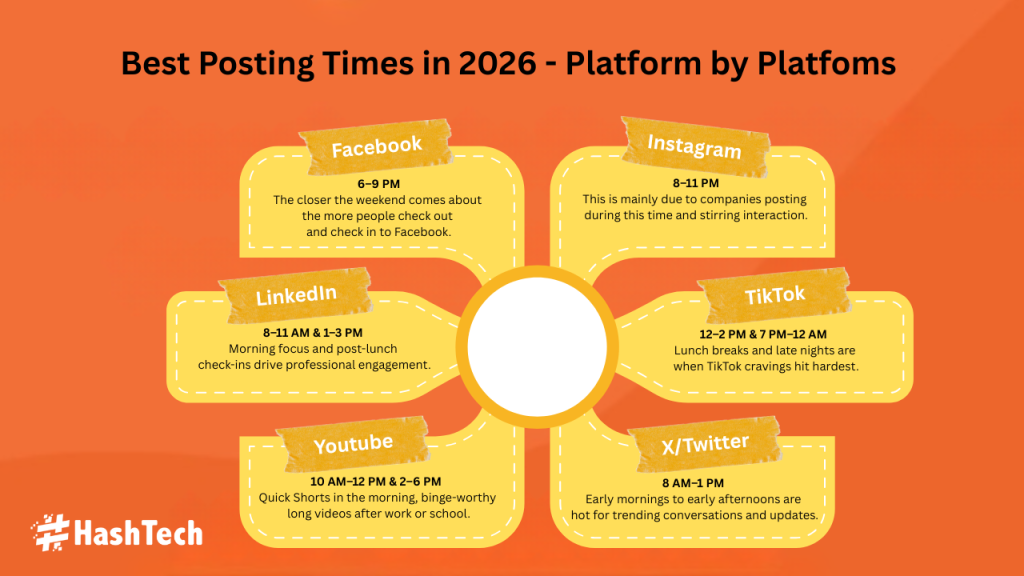
Platform by Platforms Best Posting Times in 2026
Instagram continues to dominate visual storytelling, but Reels have reshaped timing behavior dramatically. Peak engagement still happens during early evenings when users unwind, but a new trend has emerged: morning micro-consumption.
Best times:
- 7 AM – 9 AM (morning micro-scroll)
- 12 PM – 2 PM (lunch window)
- 7 PM – 10 PM (entertainment scroll)
Reels have their own sweet spot around 8 PM – 11 PM, and stories do best: 6 AM – 10 AM + 4 PM – 8 PM
TikTok
TikTok operates like a living organism; its For You feed is constantly evolving. Viral bursts happen when the platform identifies high interaction velocity within the first 30 minutes. In 2026, the most active windows are late evenings, especially between 7 PM and midnight, when users are relaxed and binge-watching. There is also a rising trend of lunchtime scrolling from 12–2 PM, largely because TikTok’s predictive engine now pushes quick discovery content during breaks.
LinkedIn remains the powerhouse for B2B visibility, and its timing is surprisingly stable. Mornings between 8 AM and 11 AM dominate, as professionals often scroll before meetings or while planning their day.
A newer pattern in 2026 is the post-lunch productivity reset, a window between 1–3 PM when decision-makers check updates while easing back into tasks. Carousel posts and thought-leadership text posts perform best in the early morning hours.
Even though younger audiences shifted away, Facebook’s community-driven behavior gives it consistent posting rhythms. The highest engagement occurs during evenings between 6 PM and 9 PM when people check updates from groups or family. Facebook’s algorithm heavily favors recency in group posts, so timing can dramatically influence visibility. Weekends remain strong, especially Saturday mornings, when users spend more time browsing.
Automate your social media with HashTech and maximize your posting efficiency using our social media automation tools to schedule content across multiple platforms.
YouTube
YouTube’s timing depends greatly on content type. Long-form content performs best when posted between 2 PM and 6 PM, as viewers are more likely to watch during evenings or after work. Shorts, meanwhile, thrive earlier in the day, 10 AM to 12 PM, because Shorts feed cycles are refreshed constantly and reward early traction.
In 2026, notifications still matter, so posting when your subscribers are typically online increases the chance of instant clicks, feeding positive signals back into your performance metrics.
X (Twitter)
X (formerly Twitter) is still driven by real-time conversations, but AI now plays a bigger role in surfacing trending content. News updates and commentary posts perform best during morning commutes and early afternoons, typically 8 AM–1 PM. Threads tend to perform better when posted earlier in the day to give them time to accumulate engagement before peak hours.
Myth vs Truth of Posting Times
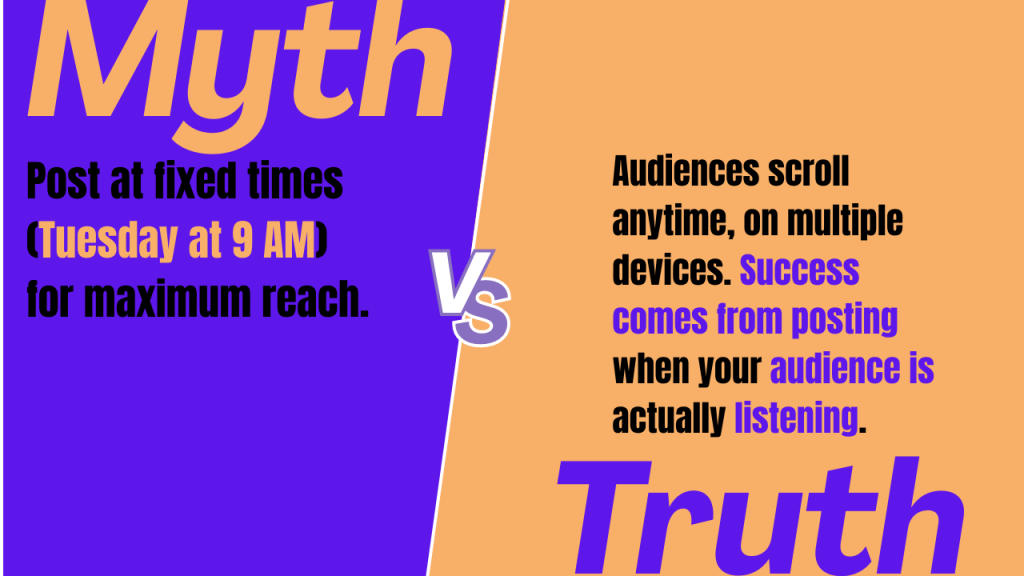
Myth: Post at fixed times (Tuesday at 9 AM) for maximum reach.
Truth: Audiences scroll anytime, on multiple devices. Success comes from posting when your audience is actually listening.
Industry-Specific Posting Windows (2026)
Posting times vary by niche, so a one-size-fits-all schedule doesn’t work.
- E-commerce brands perform best in evenings when users browse casually and are more likely to make impulse purchases.
- SaaS and tech brands generally get more traction during work hours and early afternoons when professionals are researching tools.
- Personal brands and creators thrive during morning and late-night windows, especially on TikTok and Instagram.
- Travel and hospitality posts see higher engagement during weekends and evenings because people dream and plan more during downtime.
- Real estate content performs strongly on weekends and weekday evenings when browsing listings becomes a leisure activity.
- Health and wellness brands often do well early in the morning when audiences seek motivation for the day.
These industry patterns should serve as starting points. Once analytics confirm your top-performing windows, narrow your posting routine to those high-engagement hours.
How to Calculate Your Brand’s Personal Best Posting Time
While general posting windows are helpful, the real power comes from discovering your personalized timing. Use analytics to identify when your followers are active and engaging the most. Many platforms now offer heatmap insights, showing peak activity hours. Study retention dips: when your content performs poorly during certain windows, that’s a sign those times aren’t ideal.
AI tools in 2026 can predict your optimal posting window by analyzing your follower activity, past performance, and even competitor content. Regularly review these predictions, because audience behavior evolves every few months. Testing is essential. Experiment with different time blocks for two weeks at a time, then compare results. Patterns will emerge quickly.
Difference Between Conversion Timing vs. Engagement Timing
One of the biggest traps brands fall into is assuming that the best engagement time is also the best conversion time. In reality, engagement peaks often happen when users have time to browse—but conversions occur when they have mental space to make decisions.
For example, audiences engage heavily with content late at night, but they tend to convert the following morning when they feel clear-headed. In contrast, LinkedIn audiences often convert during working hours because they are already in a business mindset. Understanding this difference helps you pair your content types with the right timing strategy.
The 3–1 Rule for 2026 Timing
The 3–1 Rule is a simple way to stay consistent and improve visibility in 2026. Instead of posting randomly, you choose three strategic windows each week and assign one specific content type to each. This creates a predictable rhythm your audience adapts to, and it strengthens engagement signals over time.
How it works:
- Choose 3 core posting windows based on when your audience is most active.
- Assign 1 content type to each window and repeat it weekly.
- Maintain consistency so both your audience and the algorithm learn your cadence.
Example schedule:
- Morning: Carousels
- Midday: Reels or TikToks
- Evening: Long-form posts or caption-heavy content
This simple structure keeps your posting organized, strengthens habits, and boosts long-term reach.
What’s the Best Practice You Should Follow in 2026
Winning in 2026 starts with posting before your audience becomes active, not during their peak window. This gives your content time to build early engagement so the algorithm can push it when your audience starts scrolling.
Rotating time blocks is another key strategy. Instead of posting at the same hour every day, mix it up, Monday morning, Tuesday evening, Wednesday midday. Rotations help you discover hidden high-performance windows and reach different segments of your audience.
Use 24-hour backward analysis to refine your timing. Look at when your last posts gained the fastest engagement velocity and which hours consistently produced strong reactions. These patterns reveal your true posting sweet spots.
Finally, avoid universal dead zones. Hours like 2–6 AM, the 3–4 PM fatigue window, Friday late nights, and early Sunday mornings rarely deliver enough early engagement to help your content rank. Steering clear of these periods protects your posts from getting buried.
This simple practice ensures your content enters the feed with momentum and reaches your audience when they’re actually ready to engage.
Transform your social media performance in 2026 with our complete strategy planning and automation solutions to consistently reach and engage your audience.
Get started with HashTech today and take full control of your social media growth and engagement.
FAQs
What are the best posting times in 2026?
The best universal posting times in 2026 are 7–9 AM, 12–2 PM, and 7–10 PM. These windows match global behavior spikes across major platforms. However, each platform has unique peaks, and your best time depends on your audience’s location, device habits, and engagement patterns. Always verify through analytics.
Do posting times still matter with AI-curated feeds?
Yes. Timing affects your initial engagement velocity, which AI uses as a performance predictor. Posting when your audience is most active increases early interactions, improving your chances of ranking in AI-driven feeds and recommendations.
How do I find my own best posting time?
Start by checking your platform analytics for follower activity peaks. Test three time blocks each week and track engagement patterns. Over time, your strongest windows will reveal themselves through consistent high-performance periods.
Are weekends better for posting in 2026?
Weekends work best for lifestyle, travel, real estate, and e-commerce niches. B2B and SaaS brands generally perform better on weekdays when audiences are in work mode and more receptive to professional content.
What time zones should global brands follow?
Global brands should post according to the local peak hours of their primary audience segments, typically between 8–11 AM and 6–9 PM in each region. For multiple regions, stagger posts to match these windows, ensuring content reaches followers when they are most active.
How often should I change my posting times?
Review and adjust your posting schedule every 60–90 days. Audience behavior evolves with seasons, trends, and algorithm updates, so refining your timing keeps your reach optimized.
What ruins posting performance the most?
Posting during low-activity windows reduces your initial engagement, which lowers your predicted performance score. Poor timing can bury even great content before it has a chance to be discovered.
Does adding FAQs help my content rank in AI search?
Yes. FAQs give AI models clean, structured answers that they can extract easily. Adding FAQ schema and using clear question headings increases your chances of appearing in generative search results and boosts topical authority.
Are posting times different for Reels vs static posts?
Yes. Reels thrive during high-activity windows when users scroll for quick, engaging content. At the same time, static posts perform better during consistent mid-day or evening periods when audiences have more time to engage thoughtfully.
Which scheduling tools recommend the best posting times for 2026?
In 2026, AI-powered scheduling tools, such as Buffer, Later, Hootsuite, and Sprout Social, analyze follower activity, engagement velocity, and platform trends to suggest optimal posting times. These tools predict when your audience is most active, automatically recommending windows for Reels, Stories, Shorts, and static posts to maximize reach and early engagement.