


SEO in 2026 is not what it used to be. Many people still think SEO is only about ranking on Google or adding keywords to a page. That idea is now outdated. Search has changed, and so has the way content is found, shown, and trusted online.
Today, people do not always click links. They ask questions. AI tools answer them directly. Search engines decide which websites are helpful enough to be used as sources. This means SEO is no longer just about being seen. It is about being chosen.
In 2026, websites compete to become the best answer, not just the top result. Some old SEO tactics still work, but many no longer matter. New rules now guide how AI understands content, how it selects information, and how brands stay visible.
In the next sections, we will break down how SEO works in 2026, what has changed, and what truly helps content perform in an AI-first world.
Losing traffic because your content isn’t AI-friendly? Hashtech helps you restructure pages, add FAQs, and stay visible to both users and AI.
From Search Engines to Answer Engines
In the past, search engines worked like libraries. You typed a keyword, and they showed you a list of links. Your job was to click, read, and find the answer yourself. That system worked for many years.
In 2026, search works very differently. Search engines are now answer engines. People ask full questions, and AI tries to give the best answer right away. Sometimes users do not even need to click a website. The answer appears on the screen instantly.
This change is important for SEO. Ranking number one is no longer the final goal. The real goal is to become the source that AI trusts and uses when it creates answers.
AI looks for content that is clear, direct, and easy to understand. It prefers pages that explain one idea well instead of many ideas poorly. This is why simple language, clean structure, and question-based content work better in 2026.
If your content helps AI answer questions clearly, your website stays visible. If it does not, even a high-ranking page can slowly disappear.
How AI Changed the Way People Search
People no longer search using short keyword phrases. They now ask full questions like they would ask a person. This is because AI tools understand natural language very well.
Instead of typing SEO 2026, users ask, What will SEO look like in 2026?
Instead of best marketing tips, they ask, How can I market my business in 2026?
This means content must match real questions. Pages that answer questions clearly are more useful to AI and to users.
Another change is fewer clicks. Many searches end without a website visit because the answer is already shown. This is called a zero-click search. In 2026, this is normal behavior, not a problem.
To win in this environment, content must be strong enough to be quoted, summarized, or referenced by AI systems.
Why Traditional SEO Playbooks Are Failing
Old SEO focused heavily on keywords, backlinks, and long articles written for search engines instead of people. While some of these still matter, they are no longer enough.
AI does not reward content that is confusing, stuffed with keywords, or written only to rank. It rewards content that solves a problem quickly and clearly.
Writing more pages does not help if those pages do not add value. Buying backlinks does not help if your content does not answer real questions. Long articles do not help if they are hard to understand.
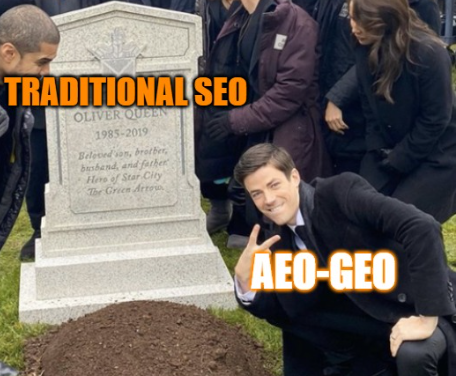
In 2026, SEO is less about tricks and more about usefulness. Content must be helpful, structured, and easy for AI to read and trust.
Frustrated with outdated SEO tactics that no longer work? Hashtech builds modern SEO strategies that focus on clarity, authority, and generative search visibility.
How AI Evaluates Content in 2026
In 2026, AI does not read content like humans. Instead, it scans pages to find answers quickly. It looks for signals that show which content is useful, trustworthy, and complete. Understanding what AI values helps your content get noticed and used in answers.
What AI Looks for
AI checks several things when evaluating content:
- Clear Answers: Content must answer questions directly. The faster the answer is clear, the more AI trusts it.
- Structured Information: Using headings, subheadings, lists, and paragraphs makes it easier for AI to understand your content.
- Topic Completeness: Cover the question fully. Content that leaves gaps is less likely to be cited.
- Authority Signals: Mentions of brands, references to reputable sources, and proper citations increase trust.
AI also prefers content that is simple, precise, and well-organized. Pages that are cluttered or hard to read get ignored, even if they have lots of keywords.
Why Structure Beats Length
In 2026, a very long article does not automatically perform better. AI cares more about how easy it is to extract an answer.
- Headings: Clearly labeled sections make content scannable.
- FAQs: Question and answer format helps AI find the answer quickly.
- Short Paragraphs: Easy to digest blocks of text are preferred.
A short, structured page that answers a question fully can outrank a long page that rambles or is disorganized.
Keywords Are Not Dead (But They’re Not the Goal)
Many people think SEO is all about keywords. In 2026, that is only partially true. Keywords still matter, but not the way they used to. Search engines and AI no longer rely on exact phrases to understand content. They now focus on topics, intent, and context.
The Evolution of Keywords
Before, you could rank by repeating the same word many times. Today, AI looks for content that answers a user’s question fully, even if it uses different words. For example:
- User query: How to improve website SEO in 2026?
- Content might say: Ways to boost online visibility using AI-friendly content, structured answers, and topical authority.
The content still matches the query but does not repeat the exact keyword.
Search Intent Clusters
Keywords are now part of search intent clusters. This means AI groups questions and topics together to understand what a user wants. Your content should cover all related ideas around a question, not just one keyword.
For example, a topic cluster for SEO in 2026 might include:
- AI content evaluation
- Structured data and schema
- FAQ optimization
- Brand mentions and authority
Covering the cluster helps AI recognize your content as the complete answer, not just a page about one word.
Semantic Relevance
AI also uses semantic relevance. This means it looks at the meaning of words and how they relate to each other. Writing naturally and including related terms and ideas improves your chances of being selected as a trusted source.
Topical Authority Is the New Domain Authority
In 2026, SEO is less about how many backlinks you have and more about how much you know about a topic. This is called topical authority. AI looks for websites that cover a topic thoroughly and provide clear, trustworthy answers. If your website is recognized as an expert on a topic, AI is more likely to use your content as a source.
What Topical Authority Means
Topical authority means your site answers all the questions people might have about a subject. It shows AI that you are reliable, comprehensive, and useful. Even a small website can outrank bigger brands if it covers a topic better and answers questions fully.
For example, a website about “SEO in 2026” should have content that covers:
- AI-driven SEO changes
- Keyword evolution
- Structured data and schema
- FAQs and answer optimization
- Brand signals and authority
When AI sees that your site has multiple pages on a topic, it trusts it more.
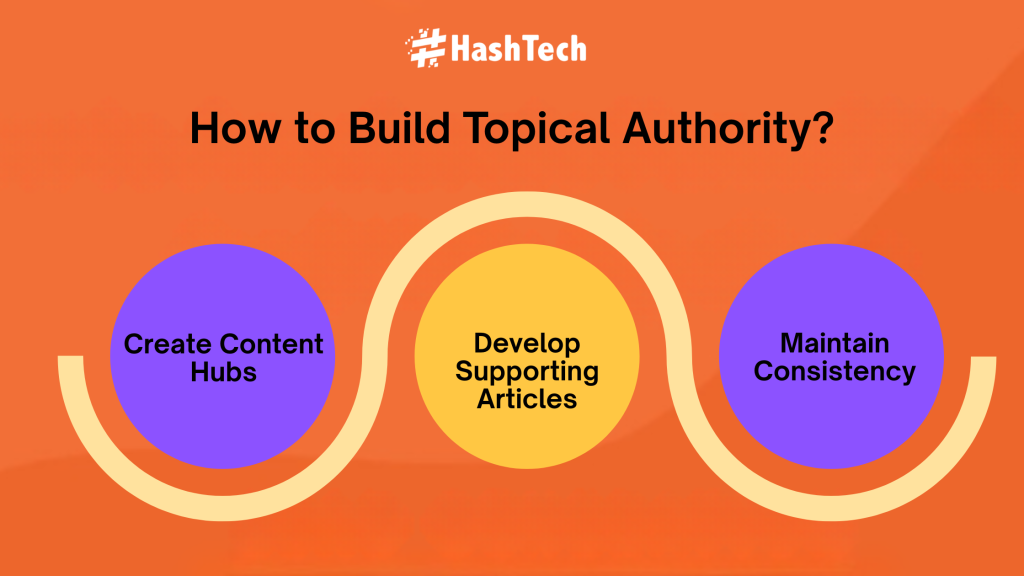
How to Build Topical Authority
- Content Hubs and Pillar Pages: Create a central page that introduces the main topic and links to supporting articles.
- Supporting Articles and FAQs: Cover smaller questions that relate to the main topic. Each page adds credibility.
- Consistency: Publish content regularly to show AI your site is active and reliable.
The more questions you answer clearly, the more AI sees your site as a go-to resource, which improves your visibility in search and generative AI recommendations.
Are your competitors outranking you despite similar content? Hashtech boosts your topical authority and brand mentions so AI trusts your pages first.
The Rise of FAQs as an SEO Weapon
In 2026, AI loves content that is structured and easy to understand. One of the most powerful ways to achieve this is through FAQs, question-and-answer sections on your website. FAQs make it simple for AI to find answers and for users to get information quickly.
Why AI Loves Q&A Content
AI models are trained on question-and-answer patterns. When your content directly answers real questions, it is much more likely to be cited or shown in generative answers. Short, clear answers help AI understand exactly what your page is about.
Some benefits of FAQs include:
- Better extraction for AI: AI can quickly pull answers for search snippets or voice responses.
- Increased topical authority: Each FAQ acts as a mini knowledge block on your site.
- Higher engagement: Users can find what they need without scrolling through long paragraphs.
How FAQs Boost Rankings and AI Visibility
- Improved engagement metrics: FAQs keep readers on the page longer and reduce bounce rates.
- Schema advantages: Adding the FAQPage schema tells search engines exactly where questions and answers are, improving your chance for rich results.
- Generative search inclusion: AI uses well-structured FAQs to generate accurate answers, increasing your content’s visibility in AI-driven search results.
In short, FAQs are no longer optional. They are a direct way to communicate with AI and users simultaneously, giving your site a clear edge in 2026 SEO.
Schema Is No Longer Optional
In 2026, schema is not just a nice-to-have, it is essential for SEO. Schema is a type of code added to your website that helps search engines and AI understand your content better. It gives context and meaning to your pages so that AI knows exactly what each part is about.
What Schema Does for SEO in 2026
- Helps AI Understand Context: AI can scan your page and immediately see what questions it answers.
- Enhances SERP Features: Schema allows your content to appear as rich results, knowledge panels, or answer boxes.
- Increases Citation Probability: When AI needs sources to answer a question, pages with proper schema are more likely to be cited.
Must-Have Schema Types
Some schema types are especially powerful in 2026:
- FAQPage: Ideal for Q&A content and increases your chances in AI-generated answers.
- Article: Shows the content is a formal article and improves trust.
- HowTo: Perfect for step-by-step instructions.
- Organization: Provides AI with information about your brand or business.
Adding schema is like giving AI a map of your content. The clearer your map, the more likely AI is to trust your content and show it in search results.
Content Experience Signals Matter More Than Ever
In 2026, AI not only looks at what content says but also how people interact with it. This is called content experience, and it is becoming a major ranking factor. AI measures signals that show whether your content is helpful, engaging, and easy to use.
Key Content Experience Signals
- Time on Page: How long visitors stay shows if your content is useful. Longer engagement signals value.
- Scroll Depth: If users scroll through most of your content, AI sees that it is thorough and readable.
- Interaction Signals: Clicking links, sharing content, or interacting with FAQs indicates the page is engaging.
Content that is easy to read, well-organized, and visually clear performs better. Long walls of text, confusing layouts, or slow-loading pages reduce trust and visibility.
Why Helpful Content Wins
AI rewards content that solves problems quickly and clearly. Pages that answer questions effectively, guide readers, and provide structured information are more likely to be cited or featured in AI-driven answers.
In short, creating a positive content experience is as important as the content itself. If AI sees users interacting well with your pages, it boosts your credibility, authority, and visibility.
Chase Brand Mentions, Not Just Backlinks
In 2026, SEO is moving beyond traditional backlinks. AI now looks at brand mentions across the web to measure trust and authority. Even if there is no link, a mention of your brand on a reputable site can improve your visibility.
How Mentions Influence AI Trust
AI treats brand mentions like votes of confidence. When multiple trustworthy sources talk about your brand, AI sees your content as reliable and credible. This works for both linked and unlinked mentions.
- Linked Mentions: Traditional backlinks are still useful but not the only signal.
- Unlinked Mentions: Social media posts, news articles, podcasts, and videos all count as signals of authority.
Where AI Picks Up Brand Signals
AI monitors mentions across platforms:
- News sites and blogs: Trusted publications increase credibility.
- Forums and communities: Expert discussions show relevance.
- Social platforms: Mentions on Twitter, LinkedIn, or Instagram indicate active presence.
- Podcasts and video content: Shows thought leadership and reach.
In short, building a strong brand presence online is just as important as building backlinks. AI favors brands that are trusted, referenced, and recognized across multiple platforms.
SEO Is Now Multi-Platform
In 2026, SEO is no longer just about Google. People discover content across multiple platforms, and AI uses signals from all of them to decide which content to show. This means your SEO strategy must work on search engines, social media, AI assistants, and marketplaces.
Where SEO Happens Today
- Search Engines: Google, Bing, and others still matter, but AI now determines which pages get cited.
- Social Discovery: Platforms like TikTok, Instagram, LinkedIn, and X (Twitter) influence content visibility. High engagement can boost AI trust.
- AI Assistants: Chatbots and voice assistants pull answers directly from your content. Structured, clear answers increase your chances of being used.
- Marketplaces: Sites like Amazon or Etsy are also search engines for products. Optimized content helps AI understand your offerings.
Why Multi-Platform SEO Matters
AI looks at signals from all over the web to determine trust and authority. A website that performs well across platforms is more likely to be cited as a reliable source. Brands that ignore non-traditional platforms may lose visibility in generative search results, even if they rank on Google.
What Still Works (And What Doesn’t)
SEO in 2026 is different, but some strategies still work, while others are now outdated. Knowing the difference helps you focus on what truly drives visibility.
What Still Works
- High-Quality Content: Content that clearly answers questions is still the most important factor.
- Structured Data: Using headings, lists, and FAQ schema makes it easier for AI to extract information.
- Brand Mentions: Both linked and unlinked mentions show authority and trust.
- Internal Linking: Connecting related pages reinforces topical authority.
- User Experience: Fast loading, readable layout, and mobile-friendly design are crucial.
What Doesn’t Work
- Keyword Stuffing: Repeating keywords unnaturally no longer helps.
- Low-Quality Backlinks: AI focuses on relevance and trust, not just link count.
- Long, Confusing Articles: Length alone does not guarantee ranking; clarity and structure matter more.
- Focusing Only on Google: Ignoring social platforms, AI assistants, or marketplaces limits visibility.
How to Prepare Your SEO Strategy for 2026
Preparing your SEO strategy for 2026 requires focusing on AI-first practices. It is no longer enough to optimize for search engines alone. You need to create content that AI can trust, extract, and use to answer real questions.
1. Restructure Existing Content
Go through your old pages and make them clear, structured, and easy to read. Use headings, short paragraphs, and bullet points where appropriate. Make sure each page answers one main question clearly.
2. Add FAQs
Add question-and-answer sections to your pages. Use real questions your audience is asking. Short, precise answers help AI extract information for generative search. Adding FAQ schema improves your chance of rich results.
3. Implement Schema
Use schema markup to help AI understand your content. Include FAQPage, Article, HowTo, and Organization schemas where relevant. This gives AI a clear map of your content.
4. Build Topical Authority
Create content hubs or pillar pages that cover your main topics. Link to supporting articles that answer related questions. The more complete your coverage, the more AI trusts your site.
5. Strengthen Brand Signals
Work on getting mentions on trusted sites, social platforms, and media outlets. Both linked and unlinked mentions increase AI’s confidence in your brand.
6. Focus on User Experience
Make sure your site is fast, mobile-friendly, and easy to navigate. AI measures user engagement signals like scroll depth, time on page, and clicks to understand if your content is helpful.
By following these steps, your SEO strategy will be future-proofed for AI-driven search, ensuring your content stays visible and authoritative in 2026.
FAQs
1. What does SEO look like in 2026?
SEO in 2026 focuses on providing clear, structured answers for AI and users. It prioritizes topical authority, brand trust, content experience, and multi-platform visibility rather than just keywords and backlinks.
2. Is SEO still relevant with AI search?
Yes. SEO is still important, but it has evolved. The goal is now to be the best answer that AI can trust and use, rather than just ranking at the top of search results.
3. Do keywords still matter in 2026?
Keywords matter less for exact matches. AI looks at topic coverage, intent, and context. Use natural language, related terms, and cover the full topic to stay relevant.
4. What ranks better: backlinks or topical authority?
Topical authority now outweighs backlinks. AI prefers sites that cover a topic thoroughly and answer questions fully. Backlinks help but are no longer the main factor.
5. How important is FAQ schema for SEO?
FAQ schema is very important. It signals AI where questions and answers are, making it easier to be included in search snippets and AI-generated answers.
6. Can small websites compete in 2026?
Yes. Small websites can outrank big brands by providing complete, clear, and well-structured answers that AI trusts. Quality and authority beat size.
7. How do I optimize content for AI search engines?
Focus on clarity, structure, and topical coverage. Use FAQs, headings, short paragraphs, schema, and internal linking to make your content easy for AI to understand and cite.
8. What is the biggest SEO mistake in 2026?
The biggest mistake is ignoring AI signals. Pages that are unclear, unstructured, or fail to answer real questions may disappear, even if they follow old SEO rules.
SEO in 2026 is no longer just about rankings or keywords; it is about providing clear, complete, and trustworthy answers that AI can understand and use. Websites that focus on topical authority, structured content, brand signals, FAQs, and user experience are the ones AI chooses as reliable sources. Long, confusing articles or keyword-stuffed pages no longer guarantee visibility—clarity and helpfulness now matter most.
To succeed, businesses should:
- Build topical authority by covering subjects thoroughly.
- Implement FAQs and schema to make content easy for AI to extract.
- Focus on brand mentions and engagement across platforms.
- Optimize for multi-platform visibility to reach audiences wherever they search.
At Hashtech, we help businesses navigate this AI-first SEO landscape. From crafting structured, question-focused content to boosting brand authority and engagement, our strategies ensure your website not only ranks but also becomes the go-to answer for your audience. With our expertise, your business can remain visible, trusted, and authoritative in the evolving world of 2026 SEO.