

Remember when marketing meant flyers on windshields, radio jingles, or a “grand opening” banner across your shop?
If you’ve ever clicked an Instagram ad, watched a YouTube tutorial before buying something, or signed up for a brand’s newsletter, congratulations, you’ve already been part of digital marketing in action.
Today, marketing isn’t just about billboards or TV commercials. It’s about reaching the right person at the right time, often through their phone, laptop, or even smartwatch. Businesses of all sizes now rely on digital marketing to connect, engage, and grow faster than ever.
In this guide, we’ll break it all down, what digital marketing really means, the key types you should know, how it works behind the scenes, and the trends shaping its future.
Don’t just understand digital marketing, experience it. Hashtech builds data-driven strategies that turn browsers into buyers. Talk to our team.
What Is Digital Marketing?
Digital marketing refers to any form of marketing that occurs online, utilizing electronic devices and the internet. It’s how businesses connect with customers through search engines, social media, email, websites, and digital ads, basically, anywhere people spend time online.
Instead of handing out flyers or running TV commercials, brands now use Google searches, Instagram reels, YouTube videos, and personalized emails to reach their audience. The goal stays the same promote products, build trust, and drive sales, but the tools have completely evolved.
When Did Digital Marketing Start?
While it feels like a 21st-century buzzword, digital marketing’s story began way back in the 1990s, when the first search engines and email systems emerged.
- In 1994, the very first clickable web ad appeared, a banner ad from AT&T that simply said, “Have you ever clicked your mouse right here? You will.”
- As the internet grew, so did digital marketing: Google’s launch in 1998, followed by social media giants like Facebook (2004) and YouTube (2005), transformed how brands reached audiences.
- Fast-forward to today, digital marketing is no longer optional; it’s the heartbeat of every successful business strategy, from small startups to global enterprises.
Essentially, digital marketing facilitates communication between brands and audiences in a world that prioritizes digital platforms. Whether through SEO, social media, or email, it’s all about visibility, engagement, and conversion.
From the first clickable ad to today’s AI-driven campaigns, digital marketing has come a long way and so should your brand. Upgrade your marketing era with Hashtech’s modern digital strategies.
Understanding the Mechanics of Digital Marketing
Connecting with audiences at the right place and time has always been the core of marketing. Traditionally, this meant print ads, television commercials, and radio spots, the only channels available for decades.
But with the rise of the internet, a new era began… digital marketing. The web gave businesses a faster, more measurable way to reach consumers and track their behavior in real time.
In the early days, email marketing was the go-to digital strategy, helping brands communicate directly with consumers. Then came search engines like Yahoo! Additionally, Google introduced keyword-based advertising, which changed how brands competed for visibility online.
Next, the rise of social media platforms such as Facebook and LinkedIn enabled marketers to target audiences with incredible detail based on demographics, interests, and behavior.
The smartphone revolution took it even further, suddenly, brands could reach consumers anywhere, anytime. And the impact has been massive: according to DHL’s 2024 Global Online Purchasing Behavior Report, 52% of shoppers worldwide make online purchases at least once a week.
Digital marketing has evolved into a dynamic ecosystem that integrates data, technology, and creativity turning every interaction into an opportunity to connect, convert, and grow.
Why Digital Marketing Matters More Than Ever in 2026
Digital marketing matters because it meets people where they live online. It’s no longer an option; it’s the heartbeat of how brands grow, connect, and stay relevant in an ever-changing digital world.
Whether you’re running a small bakery in Karachi or a global tech brand, your potential customers are spending hours online. Digital marketing helps you show up where they already are, instead of waiting for them to stumble upon you.
- Over 5 billion people use the internet daily; that’s your potential audience.
- 90% of consumers look up local businesses online before visiting.
- Social media platforms are now search engines in their own right (yes, people Google on TikTok).
- AI and automation have made digital marketing easier, faster, and more affordable than ever.
In 2025, digital visibility = business credibility. If you’re not showing up online, your competitors are happily taking your place.
Your customers are already online… are you? Stay visible, relevant, and ahead with Hashtech’s expert digital marketing solutions.
Core Components of Digital Marketing
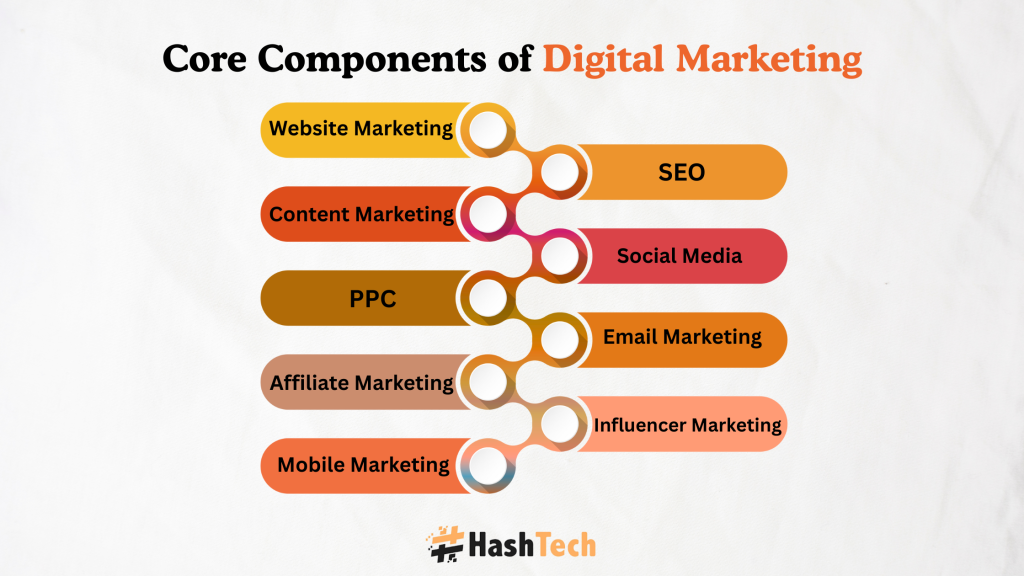
Digital marketing is a mix of strategies that work together to build your brand’s online presence. Think of it like a digital ecosystem: every channel plays a part, and when they’re all in sync, your marketing truly shines.
Let’s break down the key components and see how each works (and when they took off).
1. Website Marketing
Your website is your digital headquarters; it’s often the first impression customers get of your brand. Website marketing focuses on creating a site that’s not just good-looking but also functional, quick, and easy to navigate.
It really took shape in the mid-1990s, when businesses started realizing the internet wasn’t just for information, it could also drive sales.
Pro tip: Think of your website as your 24/7 salesperson. If it’s slow or confusing, you’re losing potential customers, even while you sleep.
2. Search Engine Optimization (SEO)
SEO began in the late 1990s, right after search engines like Yahoo! and Google appeared. It’s all about making your website more visible to people who are searching online.
SEO helps your business show up when someone types a related keyword to their query, and if your content is related to their written keyword, your website appears in the SERPs.
Example: A local bakery optimizing its site for “custom birthday cakes in Karachi”, so when someone searches that, they show up first on Google.
| What does SEO do? SEO makes sure your business get found without paying for ads. |
3. Content Marketing
Content marketing is all about giving your audience something valuable information, entertainment, or inspiration without directly selling to them. It’s the reason why blogs, videos, and podcasts exist in the digital marketing world. By sharing useful content, you’re building trust and authority in your niche.
When it comes time to make a purchase, people will always remember a business that teaches, helps, or entertains. For example, a fitness brand publishing “5-Minute Home Workout” videos is doing more than marketing; it’s creating value and value is what converts followers into customers.
Every great brand runs on a smart digital ecosystem.From SEO to social media. Hashtech manages it all under one roof. Explore our services →
4. Social Media Marketing & Automation
Let’s be real, social media isn’t just about posting anymore. It’s where your brand lives. From Instagram stories to TikTok trends, your audience wants to see, hear, and connect with you in real time. That’s where smart social media marketing (and a little bit of automation magic) comes in.
At Hashtech, we don’t just post content, we build conversations, create consistency, and help your brand show up every single day without you having to constantly hit publish.
With social media automation, you can schedule a week’s worth of posts in minutes, respond instantly to DMs or comments, and keep your pages active even while you’re busy building your business. Think of it as your 24/7 social media assistant, powered by strategy, not guesswork.
Whether you’re a new startup trying to get noticed or a growing brand ready to scale, we’ll help you turn your followers into fans and engagement into real growth.
Example: Nike’s “You Can’t Stop Us” campaign on Instagram, powerful visuals, emotional storytelling, and millions of shares.
With our social media automation services and tools, we help you stay active, consistent, and responsive 24/7. Hashtech builds social strategies that connect authentically. Let’s grow your community.
5. Pay-Per-Click Advertising (PPC)
PPC started in 2000, when Google launched AdWords (now Google Ads). It’s a paid form of marketing where you pay only when someone clicks on your ad.
PPC advertising is all about quick, measurable visibility. Instead of waiting months for SEO to kick in, PPC lets you pay only when someone clicks on your ad. You can show these ads on platforms like Google, YouTube, or social media, and target exactly who sees them — by location, age, interests, or even search intent. The benefit? Immediate traffic, precise control, and instant results.
Example: A travel agency running a Google Ads campaign for “cheap flights to Dubai” during holiday season, paying only for actual clicks.
Pro tip: SEO builds presence over time; PPC gives you instant visibility. The best marketers use both together.
6. Email Marketing
Believe it or not, email marketing is one of the oldest forms of digital marketing, it began in 1978, when the first promotional email was sent to 400 recipients.
Email marketing may sound old-school, but it’s still one of the most personal and effective ways to reach customers. It’s about sending tailored messages, whether they’re newsletters, product updates, or exclusive offers directly to someone’s inbox. Unlike social media, where algorithms decide who sees your posts, email gives you direct access. It’s excellent for nurturing long-term relationships, encouraging repeat sales, and staying top of mind.
Example: A fashion brand sending personalized discount emails to customers who abandoned their carts.
7. Affiliate Marketing
Affiliate marketing became big in the early 2000s, when e-commerce took off. Affiliate marketing is like having a team of brand ambassadors, except they get paid only when they deliver results. It’s a performance-based system where other creators, bloggers, or websites promote your products, and you pay them a commission for every sale made through their referral. It’s an easy way to expand reach and credibility without spending big upfront.
Example: A YouTuber reviewing tech gadgets and linking to them via Amazon Associates.
Why it works: It’s win-win brands get sales, and affiliates get paid for genuine recommendations.
8. Influencer Marketing
Though word-of-mouth marketing has always existed, influencer marketing as we know it began in the 2010s, with the rise of Instagram and YouTube creators.
It’s all about trust through people, not ads. Influencers have loyal audiences who believe in their opinions and that’s gold for brands.
Takeaway: Influencer marketing works best when it feels authentic, not promotional.
9. Mobile Marketing
As smartphones became mainstream around 2007–2010, mobile marketing emerged as a major player. It includes SMS promotions, mobile apps, push notifications, and mobile-friendly ads. Mobile marketing reaches your audience directly through their smartphones, via text messages, push notifications, mobile apps, or mobile-optimized ads. Since people spend most of their day on their phones, this strategy ensures your brand stays right in their hands
Example: Foodpanda sending app notifications about lunch discounts right when people are hungry, that’s smart timing.
Pro tip: If your marketing isn’t mobile-optimized, you’re missing more than half your audience.
Each of these components plays a unique role in the digital ecosystem. When combined strategically, they help brands build awareness, nurture relationships, and convert interest into action.
7 Big Reasons Every Small Business Needs Digital Marketing in 2025
1. Visibility = Credibility
When people can’t find you online, they assume you don’t exist. A website, Google Business Profile, and social presence instantly make you look legit , and that’s half the battle won.
2. It’s Cheaper (and Smarter) Than Traditional Ads
Billboards fade. Flyers get tossed. But with digital ads, you can target the right people and track every click. You’ll know exactly what’s working and where every dollar goes.
3. Build a Loyal Community, Not Just Buyers
Social media isn’t about selling , it’s about connecting. When you share stories, behind-the-scenes moments, or customer wins, you create a tribe that roots for your brand.
4. Data Tells You What Works
You don’t need to guess what your audience likes. Analytics show you everything , what content performs, when your audience is active, and what drives conversions.
5. You Can Automate and Scale Fast
From chatbots that reply instantly to email workflows that nurture leads 24/7 , automation gives small businesses a big-business feel (without the big-business cost).
6. Your Competitors Are Already Doing It
The best time to start digital marketing was yesterday. The second best? Right now. If you wait, your competitors will keep showing up while you stay invisible.
Types of Digital Marketing Campaigns
Different marketing goals require different campaign types, and that’s where strategy comes in.
- Awareness campaigns focus on introducing your brand to new audiences, think brand videos, viral posts, or influencer collaborations that get people talking.
- Lead generation campaigns aim to capture potential customers’ details through offers like free eBooks, trials, or webinars.
- Then come conversion campaigns, which are laser-focused on turning interest into action, like encouraging purchases or sign-ups through limited-time offers or retargeted ads.
- Retargeting campaigns re-engage users who visited your site but didn’t convert, reminding them of what they’re missing.
- Finally, engagement campaigns are all about interaction, building conversations, community, and loyalty on social platforms.
Together, these campaigns form the full cycle of digital marketing success, from getting noticed to closing sales and keeping customers hooked.
Benefits of Digital Marketing
Digital marketing stands out because it’s measurable, adaptable, and incredibly powerful. It allows businesses to reach global audiences while still targeting local customers with precision. You can market to anyone, anywhere, but only to those most likely to be interested.
One of the biggest advantages is real-time performance tracking, you can see exactly how many people viewed your ad, clicked your link, or completed a purchase. Plus, with personalization and automation, marketing can now feel one-on-one; tools can send tailored emails, show personalized ads, and even recommend products based on browsing history. And perhaps the best part? Digital marketing often delivers a better ROI (Return on Investment) compared to traditional channels, because every dollar spent is trackable and optimizable.
Digital Marketing Trends to Watch in 2026 and Beyond
The digital world moves fast, here’s what’s stealing the spotlight this year:
- Short-Form Video Rules: Reels, TikToks, and YouTube Shorts are still the most engaging content formats.
- AI Marketing Tools: From copywriting to ad optimization, AI is making campaigns smarter and faster.
- Voice Search Optimization: People are talking to Alexa and Google Assistant more than ever.
- Local SEO: “Near me” searches are at an all-time high, perfect for local businesses.
If you can adapt to these trends, your brand won’t just stay relevant, it’ll lead the pack.
How Small Businesses Can Get Started, Even on a Small Budget
You don’t need a big wallet to start digital marketing. You just need the right moves.
Here’s your action plan:
Set Up Your Digital Home Base
- Create or revamp your website.
- Claim your Google Business Profile (it’s free!).
Pick 2–3 Channels That Fit You Best
- Instagram + Google for visuals and local SEO.
- LinkedIn + Email if you’re B2B.
- TikTok + Reels if you’re fun and visual.
Create Authentic Content
- Share your story, not just your product.
- Post customer reviews, tips, and day-in-the-life content.
Use Free (or Cheap) Tools
- Canva for visuals
- Metricool or Buffer for scheduling
- Mailchimp for email campaigns
- ChatGPT for content ideas
Measure, Adjust, Repeat
Track what works, double down on it, and tweak what doesn’t. That’s how digital success compounds.
Challenges in Digital Marketing
Of course, digital marketing isn’t without its challenges. One major issue is ad fatigue and content saturation; with so many brands competing for attention, audiences quickly scroll past repetitive or generic content. Then there’s the growing complexity of privacy laws and data protection, which demand transparency and ethical handling of user information.
Marketers also have to confront frequent algorithm changes on platforms like Google, Instagram, or TikTok, which can suddenly affect visibility and reach. For smaller businesses, a common struggle is the skill gap not having enough expertise or resources to manage complex campaigns effectively. Despite these hurdles, understanding the challenges is the first step to overcoming them by staying informed, creative, and adaptable.
Final Thoughts: Go Digital or Go Invisible
Digital marketing gives every business, big or small, the power to do that on a global scale. Whether you’re just getting started or refining your strategy, the key is to embrace digital transformation, experiment, learn, and adapt. Consistent creativity and curiosity will always outperform a one-time campaign. The more you explore and test, the better your results will get.
Don’t let your business fade into the digital noise.Go visible, go viral, go with Hashtech. Contact us now →
FAQs
Q1: What are the 5 main types of digital marketing?
SEO, Social Media Marketing, Content Marketing, Email Marketing, and Paid Advertising.
Q2: How much does digital marketing cost for small businesses?
Anywhere from $200 to $2000 per month, depending on your goals, platforms, and whether you DIY or hire an agency.
Q3: Can I do digital marketing myself?
Absolutely! Start small , build your online presence, experiment, and use free tools before scaling up.
Key Takeaways
- Digital marketing refers to promoting products or services through online channels such as search engines, social media, email, and websites.
- It operates through a marketing funnel, from awareness and consideration to conversion and customer retention.
- The core components include SEO, content marketing, PPC, email, and social media, each serving a unique role in attracting and engaging audiences.
- Data and analytics are central to success, enabling real-time performance tracking, personalization, and continuous optimization.
- In 2025 and beyond, AI, automation, and personalization will continue shaping how businesses connect with digital consumers.
| Disclaimer: This article is intended for educational purposes only and should not be taken as professional, financial, or legal advice. Always consult with certified marketing professionals or business advisors before making strategic decisions regarding your digital campaigns or advertising investments. |